
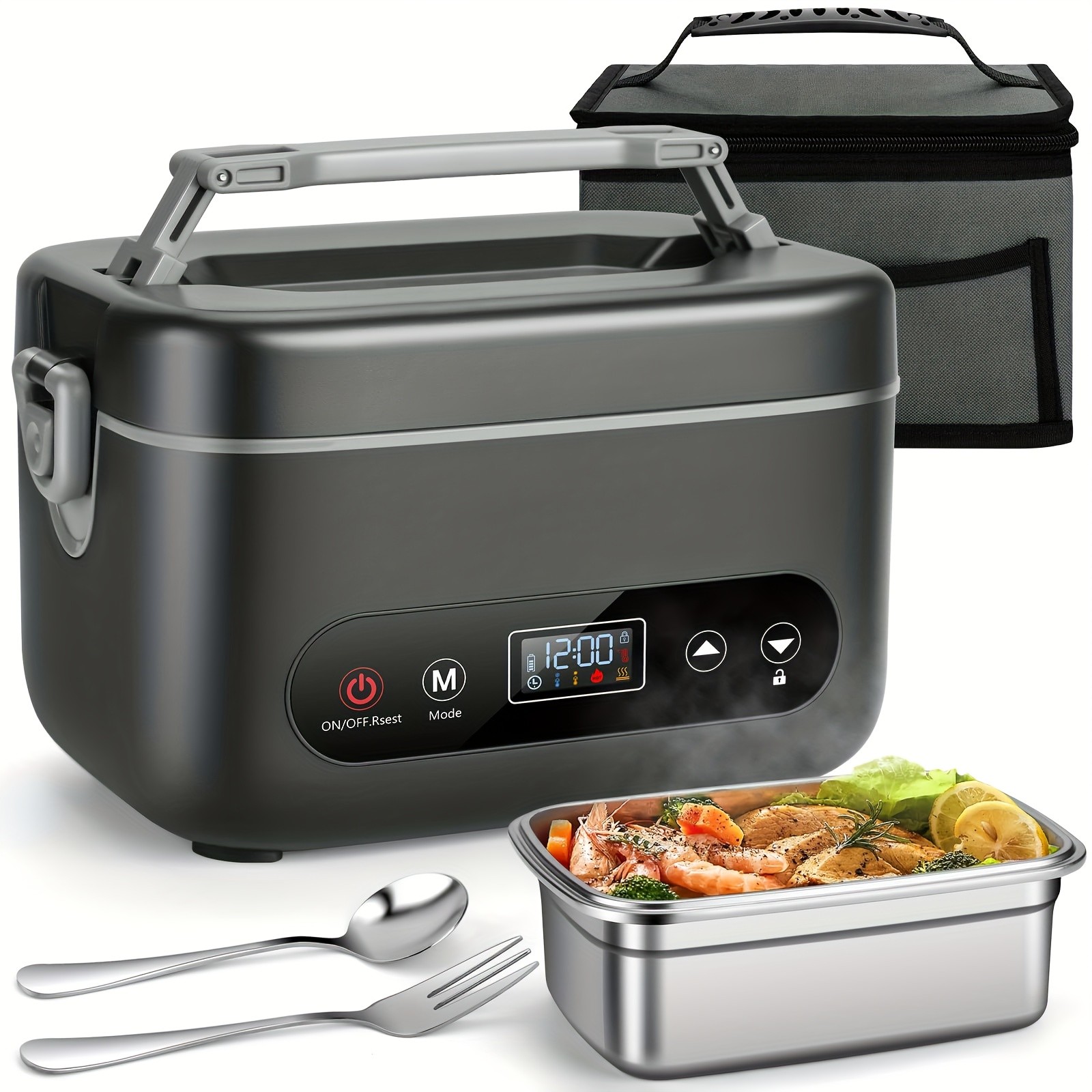
1.2L Cordless Lunch Box with 12000mAh Battery
Gift Tree Code: AU-NZ-204098
Approx $104.39 USD
Busy schedules and long days away from home often push people toward expensive takeaways or cold, rushed meals. In New Zealand, this is
especially common for office workers who do not have reliable access to a kitchen, tradies and truck drivers who spend hours on the road,
and outdoor enthusiasts who want practical meal options while camping or travelling in an RV. A cordless heated lunch box is designed to
solve that daily problem: it lets you eat a hot meal wherever you are—without needing a microwave, without relying on a shared work kitchen,
and without stopping at a service station for another overpriced snack.
This 1.2L cordless lunch box with a 12000mAh built-in battery is positioned as a portable meal-heating system that combines multi-element
heating, automatic temperature control, and a stainless food container in a compact, travel-friendly format. With five heating elements
designed for more even heat distribution and auto temp control to help reduce overheating or drying out food, it aims to deliver a simple
outcome: warm meals on demand, whether you are at the office, in a truck cab, at a campsite, or parked up at a picnic spot.
For NZ users who value convenience, meal prep savings, and better day-to-day nutrition, a rechargeable lunch box heater can quickly become
one of the most practical tools you own—especially during colder months when a warm meal improves comfort and energy.
Why Cordless Meal Heating Is a Practical Upgrade in New Zealand
New Zealand work and travel habits create many “no-microwave” situations:
construction sites and mobile work locations
trucking routes and long-haul drives
shared workplaces with limited kitchen access
shift work where meal breaks do not align with kitchen availability
commuting patterns where you eat in the car before or after work
camping, road trips, and RV travel where power access varies
Even when a microwave exists, it can be inconvenient: queues at lunch times, questionable hygiene in shared kitchens, or restrictions in
some workplaces. A cordless lunch box gives you control. You warm your meal when you want, in your own container, without depending on
shared equipment.
For many NZ households, this also supports budget-friendly routines. Meal prepping at home and heating on the go can reduce spending on
daily lunch purchases, especially in cities where food costs are high.
What This 1.2L Cordless Heated Lunch Box Is Designed to Do
This product is designed to function as both a lunch container and a portable heater. The key features—1.2L capacity, 12000mAh built-in
battery, five heating elements, automatic temperature control, and stainless steel construction—work together to make it practical for daily
use.
The intended outcomes are:
heat meals anywhere without being plugged into a wall
warm food more evenly using multiple heating elements
reduce temperature spikes with automatic control
hold a satisfying portion size for lunch or a light dinner
keep food in a more hygienic, odour-resistant container
support office use, travel, camping, RV life, and picnics
Rather than being a replacement for cooking, it is a finishing tool: you prepare food at home, store it in the container, and heat it later
when you are ready to eat.
1.2L Capacity: A Practical Meal Size for Real Daily Use
A 1.2L food warmer is generally sized to handle a full meal—enough for most adults to pack a satisfying portion without needing a second
container. In everyday terms, that capacity can suit:
rice, pasta, or noodle meals with vegetables and protein
curries, stews, and stir-fries
leftovers from dinner (a common NZ meal-prep routine)
balanced meals with sides (depending on how the container is divided)
For NZ users who do physically demanding work—trades, warehousing, delivery driving, or outdoor labour—portion size matters. A lunch warmer
that is too small will not meet energy needs. A 1.2L container provides a more realistic “real meal” capacity rather than a snack-sized
solution.
12000mAh Built-In Battery: Cordless Convenience That Fits NZ Workdays
Battery capacity is one of the biggest differentiators for heated lunch boxes. A built-in 12000mAh battery is designed to provide heating
without constant access to power. This is especially useful for:
truck drivers and couriers who eat in the vehicle
field workers who cannot rely on site power
people who take lunch in parks, vehicles, or outdoor settings
campers and travellers who want hot meals without running generators
How Battery Power Translates into Real Use
In practice, battery performance depends on:
the starting temperature of the food (fridge-cold vs room temp)
how much food you are heating (full vs half-full)
ambient temperature (NZ winter conditions can slow heating)
heating duration and temperature control behaviour
The key advantage is flexibility. You are not tied to an outlet. You can heat meals at your desk, in a cab, in a parking area, or at a
campsite.
For many NZ users, this also improves routine reliability: instead of planning your day around a microwave, you plan your heating around
your break.
Five Heating Elements: More Even Heat for Better Meal Quality
A common complaint with basic heated lunch boxes is uneven warming—hot spots near the heating plate while the centre remains cool. A design
featuring five heating elements aims to distribute heat more evenly across the container, improving the overall warming performance.
More even heating can provide practical benefits such as:
fewer cold pockets in thicker meals (rice, pasta, dense leftovers)
reduced need to stir repeatedly during heating
improved texture, especially for saucy meals
more consistent warming across the full portion
This matters in NZ “meal prep reality,” where lunches are often leftovers: roast vegetables, curry, stir-fry, rice dishes, and pasta bakes.
Even heating helps those meals taste closer to freshly made.
Automatic Temperature Control: A Smarter Way to Heat Without Overcooking
Auto temperature control is designed to keep heating within an appropriate range, rather than continuously pushing heat until food dries out
or becomes overly hot in one section.
In practical terms, automatic control can help:
prevent overheating in smaller portions
reduce drying for foods like rice or chicken
support safer, more controlled warming
maintain a consistent serving temperature
This feature is particularly useful for office environments where you may start heating and continue working. Rather than constantly
monitoring the lunch box, automatic temperature regulation is designed to provide a more “set and manage” experience.
It also supports better food texture. Overheating can make meals taste less enjoyable, especially with reheated leftovers. Auto control
helps preserve moisture and flavour.
Stainless Steel Food Warmer: Hygiene, Taste, and Durability
Stainless steel is often preferred in food containers because it is durable and more resistant to staining and odour retention than many
plastics.
For NZ users, stainless steel provides practical advantages:
easier cleaning after saucy meals (curries, pasta sauces)
reduced lingering odours compared to plastic
better durability for daily commuting and travel
a cleaner taste experience for sensitive users
improved long-term reliability in a heated environment
Stainless steel also aligns with the way many NZ households already store food—using reusable containers to reduce waste and manage costs.
Ideal Use Cases in New Zealand
Office Lunches Without the Microwave Queue
In many workplaces, the lunch rush creates delays. A cordless heated lunch box allows you to warm your meal at your desk or in a quiet space
on your schedule.
This supports:
faster breaks
reduced dependency on shared kitchen equipment
a more comfortable lunch experience in winter
less temptation to buy takeaways when the microwave is busy
Truck Drivers, Couriers, and On-the-Road Work
NZ has a large transport and logistics workforce. Long routes, unpredictable schedules, and limited food options make healthy eating
difficult.
A portable heated lunch box can support:
hot meals in the cab
reduced reliance on petrol station food
better portion control and energy management
meal prep routines that save money over time
For drivers, the value is consistency: you can eat the meal you planned, not whatever is available.
Camping, RV Life, and Outdoor Days
For camping, picnics, and RV travel, convenience matters. While many NZ campers cook on gas burners, a cordless food warmer can be a helpful
supplement for:
reheating pre-cooked meals at camp
warming leftovers without setting up a full cooking station
hot meals during bad weather
meal comfort for families travelling with kids
For RV users, it can also be useful when you want to heat without drawing heavily on the vehicle’s systems, depending on your overall setup.
Picnics and Day Trips
A hot meal is not only for winter. Even in summer, warm food can be more satisfying than cold sandwiches, especially if you are out for a
full day. A portable heater helps bring variety to day trips—warm rice bowls, pasta, or leftovers—without needing a café stop.
Best Types of Meals for a Cordless Heated Lunch Box
To get the best experience, choose meals that reheat well:
curries, stews, and casseroles
rice dishes (fried rice, rice bowls, teriyaki chicken)
pasta with sauce (avoid overly dry pasta)
stir-fries with enough moisture
roast vegetables with gravy or sauce
soups (if the container supports liquid-safe use)
Meals with some moisture generally heat more evenly and retain better texture.
If heating fridge-cold meals in NZ winter conditions, allowing the meal to sit for a few minutes before heating can help performance and
reduce heating time.
How to Use It Efficiently in Daily NZ Routines
A practical daily routine might look like this:
Meal prep dinner with an extra portion
Pack the extra portion into the stainless container
Store in the fridge overnight
Bring it to work or on the road
Start heating 20–40 minutes before your break (timing depends on meal density and starting temperature)
Eat directly from the container or transfer to a plate
For office users, this can save time and reduce lunchtime stress. For on-the-road users, it turns meal breaks into something you control.
Cleaning and Maintenance Tips
To keep it hygienic and long-lasting:
clean the stainless container soon after use
avoid letting sauce dry and harden overnight
wipe the heating base carefully (avoid immersing electronics)
keep charging ports clean and dry
store with the lid open occasionally to prevent odour build-up
NZ users often carry lunch boxes in bags with other items, so it is also wise to ensure the lid seals properly and that the container is
placed upright.
Who This Portable Heated Lunch Box Is Best For
This 1.2L cordless heated lunch box is ideal for:
office workers wanting hot lunches without microwave dependence
truck drivers and couriers needing reliable meal options
tradies and field workers without easy kitchen access
campers and RV travellers wanting convenient meal heating
people meal prepping to reduce takeaway spending
anyone wanting a warm meal during NZ winter workdays
Summary: Hot Meals Anywhere, Without Relying on a Microwave
A 1.2L cordless lunch box with a 12000mAh built-in battery offers a straightforward, high-utility solution for New Zealanders who want hot
meals on the go. With five heating elements for more even warming, automatic temperature control for better texture and safer heating, and a
stainless steel food container for hygiene and durability, it supports practical daily use across offices, trucks, outdoor travel, and
camping routines.
For anyone aiming to eat better, spend less on takeaways, and maintain comfort during long days away from home, this portable meal heater
can turn meal prep into a genuinely convenient lifestyle upgrade.
The product may be provided by a different brand of comparable quality.
The actual product may vary slightly from the image shown.
Shop amazing plants at The Node – a top destination for plant lovers